
A brief history of early personal computers
Early computers were primarily for military, scientific, government, and corporate users with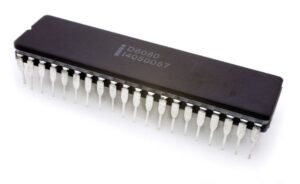 substantial needs and substantial budgets. Then in 1974, Intel launch it’s 8080 microprocessor with a high single-unit price of $360, equivalent to over $2,300 today. Prices plummeted to around $3 per unit as production scaled, making it accessible for hobbyists and early PCs.
The first PC’s were sold as build it yourself kits, and appealed to the hobbyist. Then in 1977 three commercial personal computers were introduced: the Apple II, the Commodore PET, and the Tandy RadioShack TRS-80. They were complete, ready-to-use systems. There were many other PCs made, but these three machines, often referred to as the “1977 trinity”, brought personal computing to a broader audience. The landscape of personal computing transformed dramatically when IBM entered the market in August 1981 with the IBM Personal Computer, commonly known as the IBM PC. IBM was a well known company, and organizations that had been reluctant to buy personal computers from upstart companies were comfortable buying from IBM.. Software developers made the safe choice of developing their products for IBM. The IBM PC’s open architecture meant that other manufacturers could legally create compatible machines, leading to the proliferation of “IBM PC clones”. 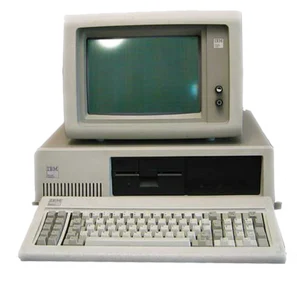
Early personal computers needed an operating system; usually some form of DOS (Disk Operating System). Microsoft licensed PC-DOS to IBM while retaining the rights to sell their own version, MS-DOS, to other manufacturers. With so many IBM PC clones using MS-DOS it became the standard operating system. In 1985, Microsoft introduced Windows 1.0, a graphical user interface that ran on top of MS-DOS. While initially crude and not particularly successful, Windows represented Microsoft’s answer to the graphical interfaces being pioneered by Apple. Even though Apple computers were more innovative, the proliferation of IBM PC clones made them more affordable and mainstream.